The Growing Journal
Bringing your garden inside for fall, one pot at a time
Bring your favorite plants indoors for fall with a plan for cold nights, pest checks, window light, and winter watering.

The garden does not have to end when sweater weather starts. It may just need a smaller address. A few healthy pots, a well-chosen window, and a slower care routine can keep the growing going long after the patio chairs are put away. The trick is to plan the move before the weather forces it, then help each plant adjust to life indoors. Think less “carry everything into the living room” and more “give each plant a place it can actually live.” Here is how to bring your garden inside for fall without inviting a pest party or drowning your favorite pothos in kindness.
1. Decide which plants belong indoors
Start with the pots you already know: the pothos that spent summer on the porch, a favorite coleus, or the houseplant you moved outside for extra growing room. Make a list and check each plant’s name. “Patio plant” describes where it spent the summer, not what it needs in winter. Tropical foliage, herbs, hardy perennials, and dormant bulbs do not all want the same treatment.
This guide focuses on tender plants in containers that can live as houseplants. It is not a plan for digging up the whole flower bed. A hardy outdoor plant may need a cold rest, while a sun-loving edible may struggle on a dim kitchen counter. Look up the care for your exact plant before giving it a permanent indoor address.
Be honest about space. Count the bright spots you have, not the empty corners you wish were bright. Choose plants that are healthy enough to keep and small enough to manage. If a large plant cannot fit, consider taking suitable cuttings instead. Our rooted-cutting care guide helps with the smaller plants you decide to keep growing.
2. Watch the night forecast, not the calendar
A warm afternoon can hide a chilly night. Check overnight lows before you make weekend plans, especially if your pots sit in an exposed spot. Do not wait for frost to prove that summer has ended. Tender plants can suffer cold damage before the forecast reaches freezing.
Iowa State Extension recommends moving houseplants indoors as nights approach 50°F. Treat that as a planning cue, then check your plant’s own temperature needs. Some need shelter sooner. If a cold night is coming now, protecting the plant takes priority over completing a perfect transition.
When the weather gives you time, move suitable plants into a more shaded outdoor position before bringing them in. The aim is to soften the change from outdoor light to indoor light. Choose a sheltered spot you can check easily, and keep watching the forecast during that settling period.
3. Give every pot a moving-day inspection
Set up a small inspection station before carrying pots through the house. A clear surface, good light, a damp cloth, and a place to collect fallen leaves will do. Work on one plant at a time so you can remember what you checked. A quick glance from the doorway is not the same as looking underneath the leaves.
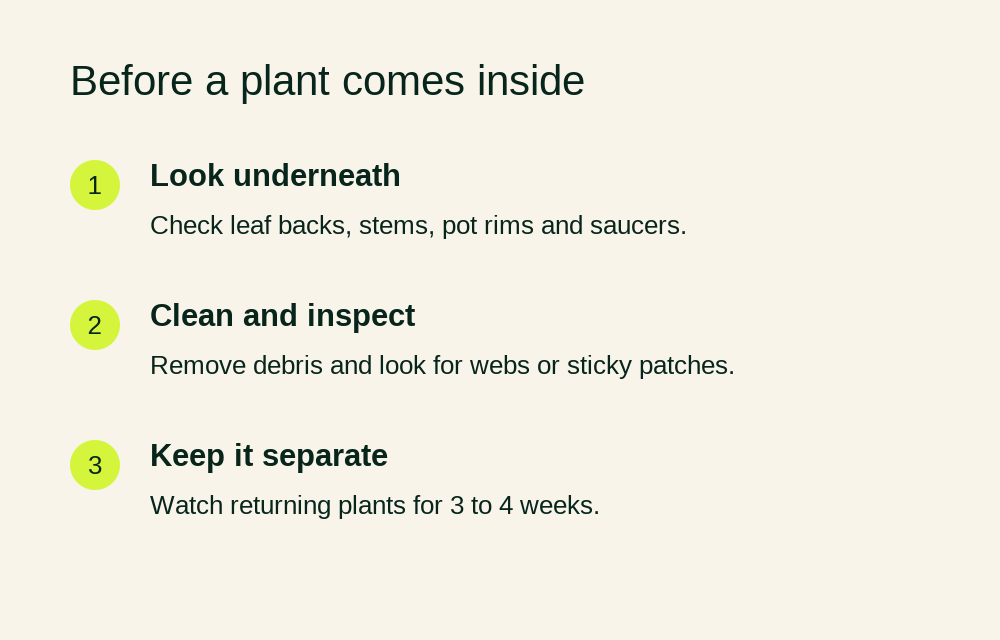
Turn the pot slowly. Check leaf backs, the places where leaves meet stems, new growth, pot rims, drainage holes, and saucers. Look for webbing, sticky patches, cottony clusters, bumps, or insects that move when disturbed. Remove fallen leaves and weeds. Clean the outside of the container so garden soil does not travel straight onto your shelf.
Rinse suitable foliage gently and let it dry before moving the plant in. Delicate or fuzzy leaves may need a different cleaning method, so match the cleanup to the plant. If you find pests, identify them before choosing a treatment. Do not mix a kitchen-cupboard spray and hope for the best.
University of Minnesota Extension cautions that pesticide labels matter: a product is not automatically suitable for indoor use or for every houseplant. Use only a treatment labeled for the plant, pest, and setting, following its directions. Edible plants need particular care when checking permitted uses.
4. Give returning plants their own space
The plant may be a familiar friend, but anything riding on it is a new arrival. Keep pots that spent summer outdoors apart from your established indoor collection while you watch them. Avoid letting their leaves touch your other plants. Keep a separate inspection routine so you notice changes before the whole shelf is involved.
Iowa State suggests three to four weeks of separation. Put the start date in your calendar. This makes “I think it has been long enough” less of a guessing game. If you spot a problem, keep the affected plant separate and deal with it before moving it into the group.
Choose a holding spot that still meets the plant’s light and temperature needs. A dark closet is not a useful quarantine area. If space is tight, bring in fewer plants rather than packing every pot tightly against the ones already growing inside.
5. Choose the window before styling the shelf
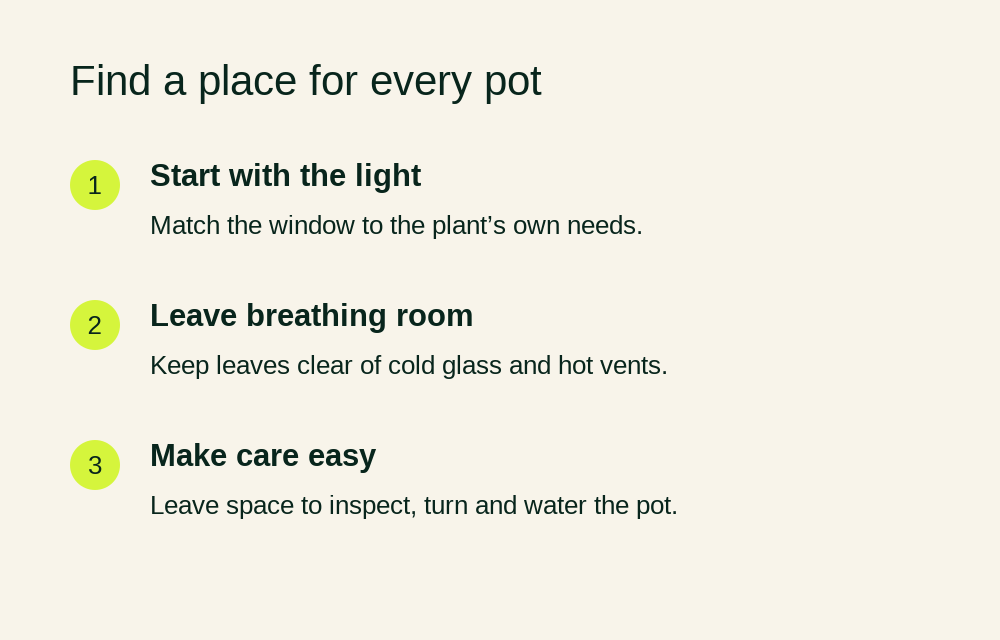
Find the light first, then arrange the room. A plant can look wonderful beside a chair and still struggle there. Watch your windows at different times of day. Nearby buildings, trees, curtains, and the direction the window faces all change what reaches the leaves. The bright room you see is not necessarily bright enough at the far wall.
The New York Botanical Garden’s indoor-transition advice recommends matching light to the plant, with sun-loving plants near a south-facing window and other plants suited to gentler light. There is no single best window for the whole collection. Check the care requirements rather than assigning every pot the same spot.
Keep foliage off cold glass and clear of heating vents. Leave enough space to lift the pot, turn it, and check for pests. If natural light is inadequate, consider a plant grow light and follow its placement instructions. A decorative lamp and a growing light do different jobs.
For a smaller arrangement, our winter window garden article offers a way to keep a growing project close at hand. Start with a manageable group instead of turning every windowsill into an obstacle course. You should still be able to open the curtains.
6. Retire the summer watering schedule
The move indoors changes the whole routine. A pot that dried quickly in warm outdoor air may stay damp much longer inside. Keep a reminder to check your plants, but let the potting mix and the plant’s needs decide whether it is time to water. “It is Saturday” is a fine reason for pancakes. It is not enough information for a watering can.
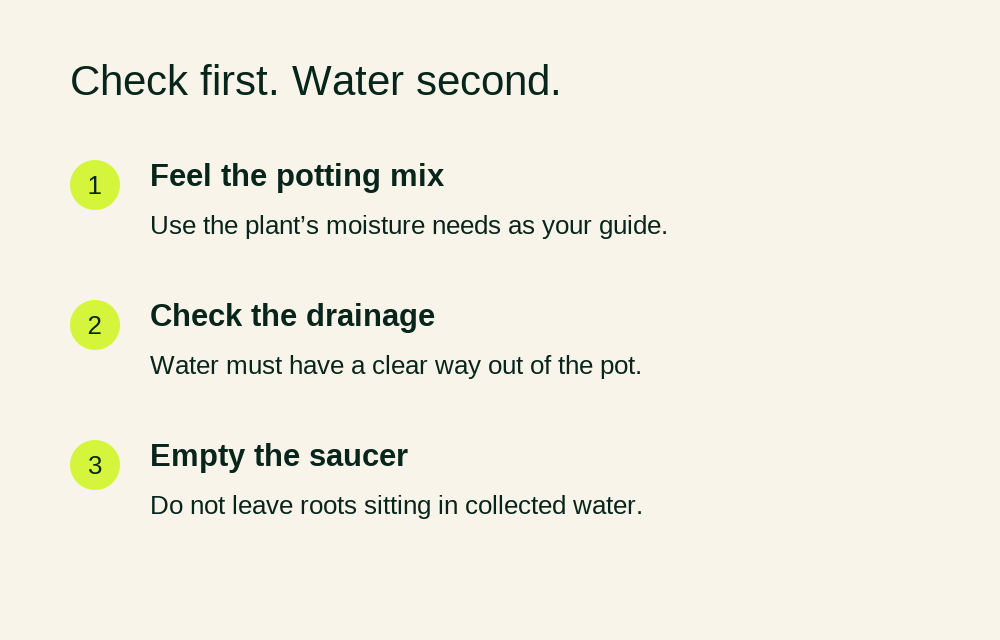
Check moisture where the roots are growing, using a method suited to the pot and plant. Notice the weight of the pot as well as the surface. A dry-looking top can hide damp mix below. Different pots may need attention on different days, even when they sit on the same shelf.
When watering is needed, make sure excess water can drain and empty the saucer or decorative outer pot afterward. If the container has no drainage, rethink the setup before continuing your old routine. A nursery pot inside a decorative cover can make drainage and checks easier.
Do not treat every yellow leaf as a request for more water. Check moisture, light, temperature, and pests first. Likewise, skip an automatic feed just because you are watering. Plants growing slowly in winter generally need less fertilizer; an actively growing plant under strong supplemental light may need care based on its species and growth. Follow its needs and the product label.
7. Expect an adjustment, then look for patterns
Some leaf loss after a move can be part of the adjustment. That does not mean every change is harmless, and it does not mean you have failed. Look at the whole plant: are stems firm, is the mix staying wet, are new leaves healthy, and is the problem getting worse? One fallen leaf tells you less than a pattern over several checks.
Avoid changing five things at once. If you move the plant, repot it, feed it, and water it again in a single afternoon, it becomes hard to tell what helped. Give a suitable position time to work while you keep watching. An urgent pest or drainage problem still needs prompt attention.
Take a clear photo on moving day. Compare later photos from the same angle rather than relying on memory. If decline continues, ask a local extension office or knowledgeable nursery for help. Share the plant’s name, pictures, watering history, and where it sits. Those details are much more useful than “it seems sad.”
8. Keep the growing habit, even on a smaller scale
Bringing the garden inside is also a chance to change pace. You do not need summer-sized growth to enjoy checking a leaf or finding a new root. Choose one small project you can actually tend: a healthy cutting, a tidy windowsill group, or a notebook where you record what changes through winter.
Make a short entry for each plant: its name, the day it came in, where it sits, what you found during inspection, and when you last checked the mix. Add observations rather than rules you feel obliged to obey. “Still damp, no water today” is a useful entry. So is “new growth leaning toward the window.”
At Root & Rise Gardens, small growing projects are part of the fun. Browse beginner growing ideas if you want an approachable place to start, or explore pothos cuttings once you have a suitable space ready. Get the plants you already own settled first. There is no prize for filling the last square inch of shelf.
Your bring-it-inside checklist
Before moving day: identify the plants you want to keep, check their cold tolerance, watch the night forecast, and choose appropriate indoor positions. Set aside a separate area for returning pots. Gather what you need for inspection and cleanup so the job feels manageable.
On moving day: inspect each plant and container, remove debris, clean suitable foliage, and record any concerns. Let rinsed leaves dry. Carry pots carefully and protect household surfaces from water. Give each plant space instead of squeezing the entire collection into one corner.
Over the following weeks: inspect for pests, check moisture before watering, empty saucers, and watch for ongoing decline. Adjust care to the plant and the indoor conditions. The goal is not a perfect jungle by dinner. It is a collection you can keep healthy, notice, and enjoy until outdoor growing weather returns.
Frequently asked questions
When should I bring my plants inside for fall?
Plan ahead of cold nights. For many tropical houseplants, nights approaching 50°F are the cue to move indoors, and some sensitive plants need protection sooner. Check the needs of your exact plant and your local forecast. Do not wait for the first frost.
Can I bring every garden plant into the living room?
No. This approach suits tender container plants that can live as houseplants. Hardy perennials, dormant bulbs, and many outdoor vegetables have different winter needs. Identify each plant before deciding whether it belongs in a warm room, a different protected space, or outside.
How do I avoid bringing bugs inside with my plants?
Inspect leaves, stems, containers, and saucers, remove debris, and clean suitable foliage. Keep returning plants separate from your existing collection for three to four weeks while you continue checking them. If pests appear, identify the problem and use a treatment labeled for that plant and setting.
Should I repot every plant before bringing it indoors?
No. Repotting is not an automatic fall chore. Check for a specific problem first, such as poor drainage or a pest issue that needs action. If the plant is healthy, focus on suitable light, careful watering, and a steady indoor position rather than changing everything at once.
Why are leaves turning yellow after I brought the plant in?
A change in light and growing conditions can cause leaf loss, but yellow leaves can also signal a care or pest problem. Check moisture, drainage, light, temperature, and leaf backs. Track whether the issue settles or keeps spreading, and get plant-specific help if decline continues.


